How Did YWAM Love Feasts Begin?

In 1971 at YWAM Lausanne, there were a couple of serious accidents on Sunday afternoons. When Loren and Darlene Cunningham sought the Lord as to the reason, they understood Him to be saying He would restore His protection when there was a new commitment to His holiness, especially concerning Sabbath observance.

There were a few other key influences during the same period.

One was a visit from two sisters of the Evangelical Sisterhood of Darmstadt, who were surprised at the unruliness of mealtimes. They suggested that meals should be times of peace, quietness, and relationship.

Another teaching from the sisters that deeply marked us was their emphasis on never letting the sun go down on one’s anger. Before going to bed, each one of them would check with the Holy Spirit to see if forgiveness should be asked of anyone else in their community. And they would write notes making things right, and slip them under the person’s bedroom door.

This teaching fit perfectly with a teaching of Joy Dawson’s message on “The Sin of Achan” (Joshua 7), that the sin of one person can prevent the Lord’s blessing on the community. We were so hungry to meet with the Lord at each Love Feast, that everyone would take time to seek Him on Friday afternoon to ask if there was any unconfessed sin in their lives, especially anything hindering relationships. And on a nice day, you would see people sitting two-by-two on the front lawn, asking forgiveness of one another and praying together.

And the Lord honoured these small steps of obedience, and met with us powerfully as we made time and space for the Holy Spirit at the Love Feast.

Reona Peterson-Joly had been teaching Orthodox Jewish children. She shared how these families observed the Sabbath: the house was cleaned from top to bottom to purge it of leaven; there was no work on the Sabbath day; the Sabbath began the night before with the best meal of the week, and most of all, there was a total focus on the Lord.

Another key influence at that time was Joe and Judi Portale’s return to the base from Czechoslovakia. There they participated in a 250 – year old Moravian tradition: the ‘love feast’, which consisted of passing around bread and telling each person what they meant to them, and how they loved them.

The Cunninghams proceeded to restore the Sabbath by adapting the Jewish traditions to YWAM Lausanne:

No work on Sunday — so the noon meal was usually cold, to reduce the kitchen work.
No sports or hard play — this wasn’t a legalistic rule, but an outworking of the commitment to ‘turn your foot from your own pleasure on the Sabbath’.
The Sabbath was a day of quiet, rest, walks in the forest, and concentration on the Lord.
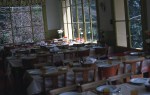
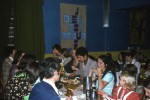
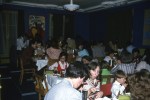
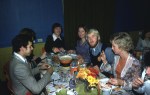
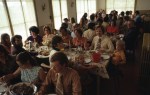
To prepare for the Sabbath, we had a love feast on Saturday evenings.
The tables were beautifully decorated with candles, centerpieces, and flowers. The best meal of the week was prepared, everybody dressed up, and we set place cards so people wouldn’t always sit next to their same friends all the time.

There was a sense of expectancy and holiness that whole day. Students and staff both prayed for hours during the afternoon for the love feast. People would go and knock on each other’s doors, to confess things to one another and ask forgiveness. Nobody wanted to be an obstacle to the Lord’s meeting with us that evening.

The children also had their own special meal with decorations, but it was earlier so they could be put to bed and the parents could be free to fully participate in the love feast.

Each week a different group would take responsibility for serving everyone else. Sometimes there were special songs and music but it was oriented toward worship, not entertainment. At the end of the meal, the love feast leader gave a meditation on one aspect of the character of God. Then we went straight into a time of worship, still seated around the tables.

The worship was not directed from up front, anybody could lead out in prayer, read a passage of Scripture, start a song, etc. The worship would last at least an hour, or even two. Nobody wanted to leave. We waited upon God together, in His Presence. In other words, it was a vertically, and horizontally, oriented meal.

YWAM Lausanne learned to worship God during the love feasts (because as late as 1974, we didn’t know how to worship yet, we had ‘singing’).

From Lausanne the love feast spread to other YWAM bases, then in 1974 the Cunninghams took it to Hawaii, and it went around the YWAM world. Later, as Jannie Rogers has said, “The god of the weekend stole it away.” He’s pretty powerful …. and it’s true, it was a tremendous amount of work. The hospitality crew would spend most of Friday to prepare the tables, and they prayed about the seating, even which singles to seat together (really!). Just folding the napkins took ten people a full hour. As base leader, I took the whole of Friday afternoon to prepare the meditation for the love feast.

In more recent times in YWAM, ‘love feast’ has come to mean any meal that’s a bit different from the normal ones. Such as the ‘love feast’ we attended at one base which consisted of a buffet, then everyone sharing their most embarrassing experience. No worship, no mention of the Lord; and the Holy Spirit didn’t even visit that one.

Fun nights are great. Most bases could use more of these kinds of evenings, they’re tremendously important in community-building. But let’s not call them ‘love feasts’, OK? Throughout the history of the Church, that term has meant a community meal which is lived in true fellowship and in the presence of the holiness of God.

Loren and Darlene did a great job of adapting the Biblical and Jewish Traditions to the YWAM culture of the early 1970’s. Now we need someone to re-adapt them for postmodern youth. What could a love feast look like for Millennials? It should be different from what we had going for those years in Lausanne, but it would of course include the emphasis on beauty, fellowship, solemn joy, and the holy Presence of God.

When you receive the vision from Higher Up, please invite me once. I’d like to see what it looks like.

Love Feast Beginnings: Thomas A. Bloomer, 1998;
Printed February 23, 2005
2019 UofN Reference Guide. Copyright © 2005 by YWAM/UofN;
Revised 2015, 2017 - Page 128
Excellence Crucified

Back a few years ago, there was a television commercial by a well-known stockbrokerage firm whose catchphrase was, ”When E. F. Hutton talks, people listen.” I could say that about quite a few people I know, but there’s one person in particular, a wise and somewhat hidden prophet, who when he talks, my ears perk up; and I listen. Carefully.

His name is Tom Bloomer, and he is International Provost of YWAM’s University of the Nations (UofN)—in fact God told him the new name for what had been called Pacific & Asia Christian University (PACU). I was there when he first shared it in 1988 at a YWAM Gathering in Manila, Philippines. This regional university was about to go worldwide.

Two of Tom’s gifts are wisdom and the ability to ‘see ahead and understand the implications of decisions we make’ (sort of like the men of Issachar, ‘who understood the times in which they lived, and knew what they should do.’ [1 Chron 12:32] Tom, when he speaks, shares carefully and only at the right time and the right place, always accompanied by a beautifully dry sense of humor.

Teaching the Word is the primary thrust of Tom’s ministry; the challenge before him is to discover what it means to love God not just with our heart, soul and strength, but with our minds as well. Tom’s hobbies include aerobic history, extreme gardening, and prophetic fifth-dimensional composting. That’s a bit of Tom for you. Here he is, speaking for himself . . .

“I want to share a principle that marks our university. I don’t think it is written down anywhere or recorded—it came from a revelation that I received when I went to get my Masters degree back in the 80s at a Christian university in America. In all their printed promotional materials (this was before we had websites), they spoke a lot about excellence and it was the same in other university catalogs. This was at the time when we were forming the UofN, so I was looking around to see what other Christian universities were doing—and not doing.

“In trying to figure out what they were saying about education, it seemed to me to be all about Excellence! Excellence! Excellence! ‘We train our students to be excellent; we want to be an excellent institution.’ This started to really irritate me and I couldn’t figure out why, because of course excellence is a wonderful value.

“And then I looked a little bit deeper. We want to be excellent because Jesus is excellent—everything he did on earth was excellent; everything he does now is excellent. And that is why we want to be excellent. I couldn’t argue with that. But it still irritated me. And I have to check these irritations because sometimes they are pretty fleshy. Other times they are like the holy irritation that the Apostle Paul felt when he saw Athens so full of idols.

“I was feeling that excellence was becoming an idol. I couldn’t figure it out. I was getting my Masters at an excellent school. And I wanted to perfect my own training as well. So I asked the Lord, ‘What is it about excellence that is irritating me?’

“And the Lord showed me this; ‘Yes, he was excellent, but he took his excellence to the cross and allowed it to be crucified, broken for the world.’ And that is the difference between wanting to be excellent and being excellent like Jesus, because Jesus took his excellence to the place of death; and allowed it to be broken and multiplied like bread to feed to the nations.

“I realized this is really what the life of Howard Malmstadt—my father-in-law—signified. He was emeritus professor of Chemistry at the University of Illinois, and left it, at the very top—age 55—to start the UofN along with Loren Cunningham. He could have gone to any university in the world and asked for any salary, any budget. But he went to found a new university.

“Howard took his worldwide reputation (he was considered to be the father of modern electronic and computerized instrumentation in chemistry), and let it be broken and buried. The word got out in the scientific community that he had joined a bunch of hippies in Hawaii. But he wanted to use his excellence for the nations.

“And today I think that is what the Lord has done with our UofN; it is a structure where you can become excellent in different fields; but then we can also show you ways to crucify that excellence.

“There was a movement in missions, which I think started in the 80’s (when a lot of other bad things started like disco music), and it kind of went like this: ‘Missions is your career and you should build your résumé.’ Today websites like LinkedIn try to do this for us. Well, I never tried to build my career—I guess I’m not very good at planning. But I ended up with the best job in the world, in the most interesting university in the world.

“I would encourage you that if you find yourself in some forgotten place; if you find yourself in a place that is overlooked by everyone and seems like nobody sees what you are doing, you’re probably right in the middle of the will of the Lord. Burtigny, a tiny village in Switzerland where I live, is to me the center of the world—not a forgotten place. The apostle Paul said it this way: That he was pouring out his life on the altar of sacrifice. It is the same principle.

“When Jesus took human form and came to earth, he did amazing things, yet only a small percentage of them are written down. But he did not stop there . . . “the Lord Jesus on the night in which he was betrayed took bread; and when he had given thanks he broke it, and said, ‘This is my body which is broken for you. Do this in remembrance of me.’” [1 Cor 11:23] Maybe what we are supposed to remember is not just the bread but the fact that his body was broken. And if we follow him on that narrow path we will do the same. And the nations will be blessed.

“I think we have some of the most wonderful and capable people in the world in the UofN. Those who could be building their résumés and be making a lot of money. But that gets to be boring after a while (not that I know for sure, but I can imagine!) I want to encourage you on the path that you have already taken, to continue to follow Jesus in whatever and wherever he leads you. And I hope that he leads you to excellence. And I pray that he leads you to ways and strategies to crucify that excellence and bless the nations!”
Copyright Thomas A. Bloomer, 1990

As Tom said, ” . . . Jesus took his excellence to the cross and he allowed it to be crucified, broken for the world.”

Let’s think about that. Crucify that which my whole purpose in life is heading towards? We’re taught at an early age to aim for excellence, to do the very best that we can (given the ‘tools’ we have).

“And let us run with perseverance the race marked out for us, fixing our eyes on Jesus, the pioneer and perfecter of faith. For the joy set before him he endured the cross, scorning its shame . . . “[Hebrews 12: 1b-2a]

From YWAM E-Touch March, 2016 Edition

The History of Lausanne

Video

The Lord led Loren and Darlene to begin YWAM’s schools in Lausanne in order that we might pick up some pf the mantles that had fallen to the ground here: hospitality, Christian university, nonformal education for sacrificial ministry exemplified in the school of Antoine Court, and teaching the nations. This 1989 video is an introduction to these domains.

One mistake; the original bishop’s residence was the smaller building seen toward the end of the video; the fortress seen at the beginning was built centuries later.

An omission: around the feet of the statue of Justice there are four human heads, representing the Pope, the king, the emperor, and the sultan. The statue was done by a French Huguenot refugee, to emphasize the truth that all people are under the Law and subject to judgement, and that the powerful are not exempt.

Tom Bloomer, Burtigny, July 2019


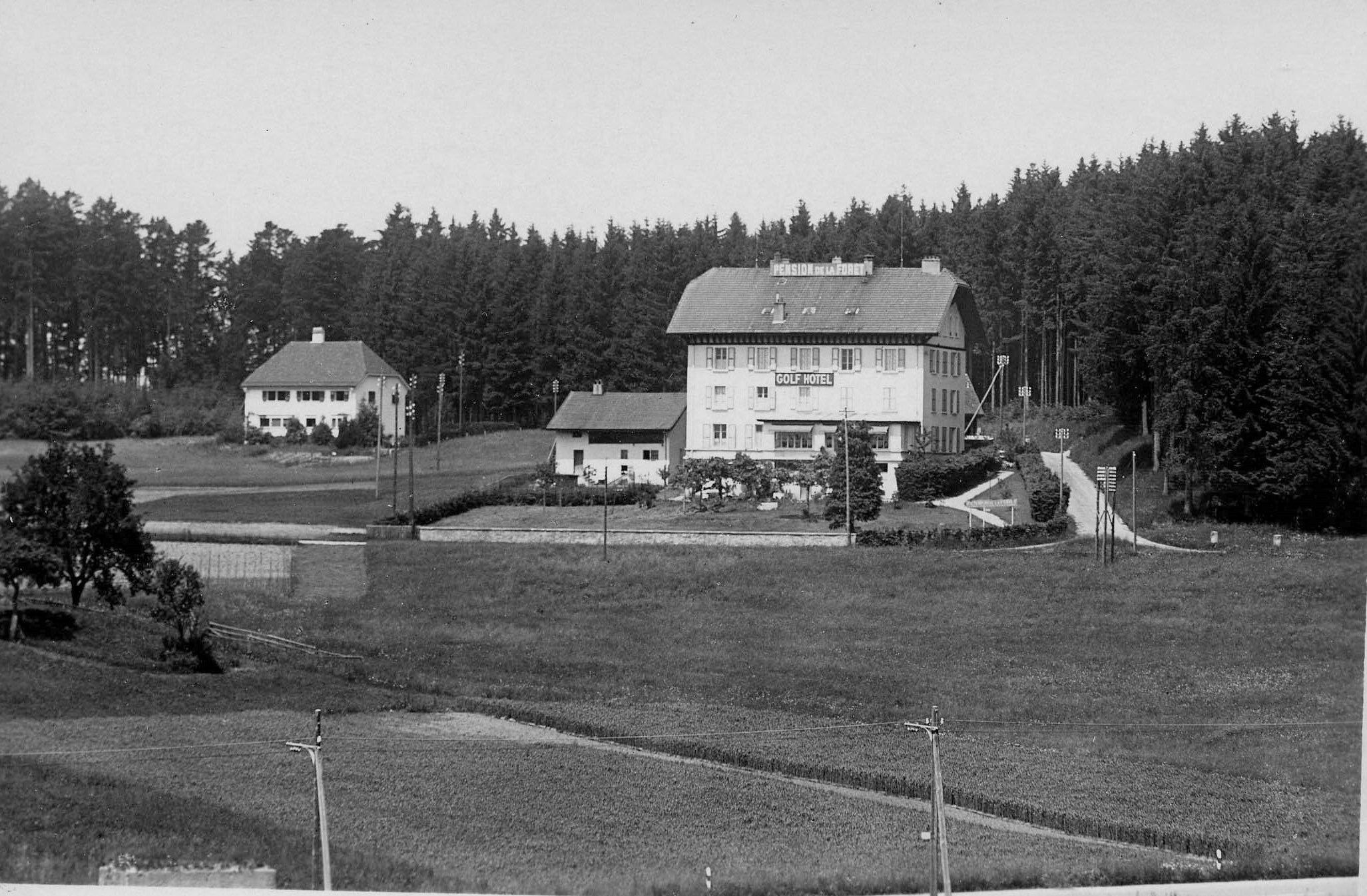
The early history of the Hotel du Golf

This is a memo written in October 7th, 1980. Tom Bloomer sent it to the base leadership team in Lausanne, Switzerland, after a conversation with the former owner of the Hotel, Mme André.

I thought you might like to know that in a conversation we had with Mme André a couple of days following M. Blanc’s death, she shared with us quite a bit about the early history of the hotel.

Some of these stories should perhaps be discounted a bit as particularly the personality details may not be 100% true. Also, Mme André’s memory for details is not what it used to be.

In any case, the hotel was built in 19O3 by a sausage butcher who had an inheritance from his mother. Apparently he was a man who was rather rude to his guests and it did not work out very well. After about 30 years the bank, Credit Foncier Vaudois, took over the hotel because he could not make the payments on the mortgage. This was in 1933-34 and the value of the hotel at that time was estimated at SFr. 80,000.

At this time they also completely redid the hotel. It was then that the running water was installed and Mme André said that everything was very well done. It ceased being a rustic type place and became more of an upscale type establishment.

Madame André arrived in 1934 to be the manager of the hotel. At that time she was Mme Cottier and she and her husband took over the place. In 1935 they built the garage. In this pre war period there were quite a number of distinguished visitors, some of whom still return here to visit the place and to see Mme André.

Back then the French franc was strong against the Swiss one, so there were Parisians, Americans and all kinds of guests. Many apparently came because the golf course nearby was one of the first ones in this part of Europe where you could play without having to be a member.

In 1948 the annex was rebuilt; it had been a chicken house and a laundry, but at this time the apartment and rooms were put in.

In 1957 Mme André bought the hotel with a mortgage from the Credit Foncier Vaudois, however she sold it just three years later in 1960 to Gaston & Trudy Hubert for 400,000 Swiss Francs. The Hubert’s redid it at this time, installing the indoor toilets. The rooms which are now toilets on the first and second floors used to be housing rooms. We rented the hotel from Mme Hubert in 1969, on condition that we take in the hotel guests who had already booked. Then we bought it from her a couple years later.

Mme André was in charge of the hotel for 36 years and lived in Room 1, which is at present the bathroom on the first floor to the left. She said, “A general always needs to be with his troops!” and I imagine she ran a pretty tight organization. Here is the list she gave me of the hotel staff as it existed in the 1930’s: 1 farmer, 1 secretary, I barman, 2 waiters, 1 chef, I assistant chef, and chamber maids hired from the area. She paid the princely wage of 5O centimes per hour to the maids (mostly farmer’s wives) and had the reputation of being able to get her money’s worth (however, we must remember of course the Swiss Franc was worth a lot more then than now, so it is difficult to compare these figures with those we know today).

Where we used to have the printing machine, and what is now our pantry now, used to be the ice storage place of the hotel. They would keep the ice down there during the summer because it was the coolest place, being under the stairs on the north side. Also, Mme André has complimented us on how the place has looked and said that many of her former clients when returning to see her have mentioned that the building looks really nice.

One American was there when both of his dogs died, and she gave him permission to bury them between the two linden trees in front of the main building. When he heard that we had bought the property, he immediately called her to make sure that their burial place wasn’t going to be disturbed.

When the plumbing system was upgraded a few years ago, trenches were dug through the front lawn and a thick layer of charcoal was plainly visible. So there used to be a large wooden building on the present site, which makes sense because it is on the corner of two very old roads. There is no record in the cantonal archives of what this building was.

Whatever was there before, I believe it was a place of unanswered prayers . . . because that would be the reason that the Lord sent Loren and Darlene to that spot to start out first YWAM training center.

Why Geneva? Why Now?

On Tuesday, 18 June 2019 I gave this short message to the delegates at a seminar in Geneva on alleviating poverty. They are in government and business mostly, and are seeing to learn how to influence the writing of good laws for their nations. The title I was given: ”Why Geneva? Why Now?”

P.S. My walking tour of the history of Geneva is on YouTube in 7 episodes.